
Protected Case Study
Accessibility at Meta
This case study is password protected and intended for hiring managers only.
Incorrect password. Please try again.
Accessibility at Meta
Building a centralized accessibility design program from scratch — growing a team, shaping company-wide strategy, and scaling inclusive design across Meta's platforms.
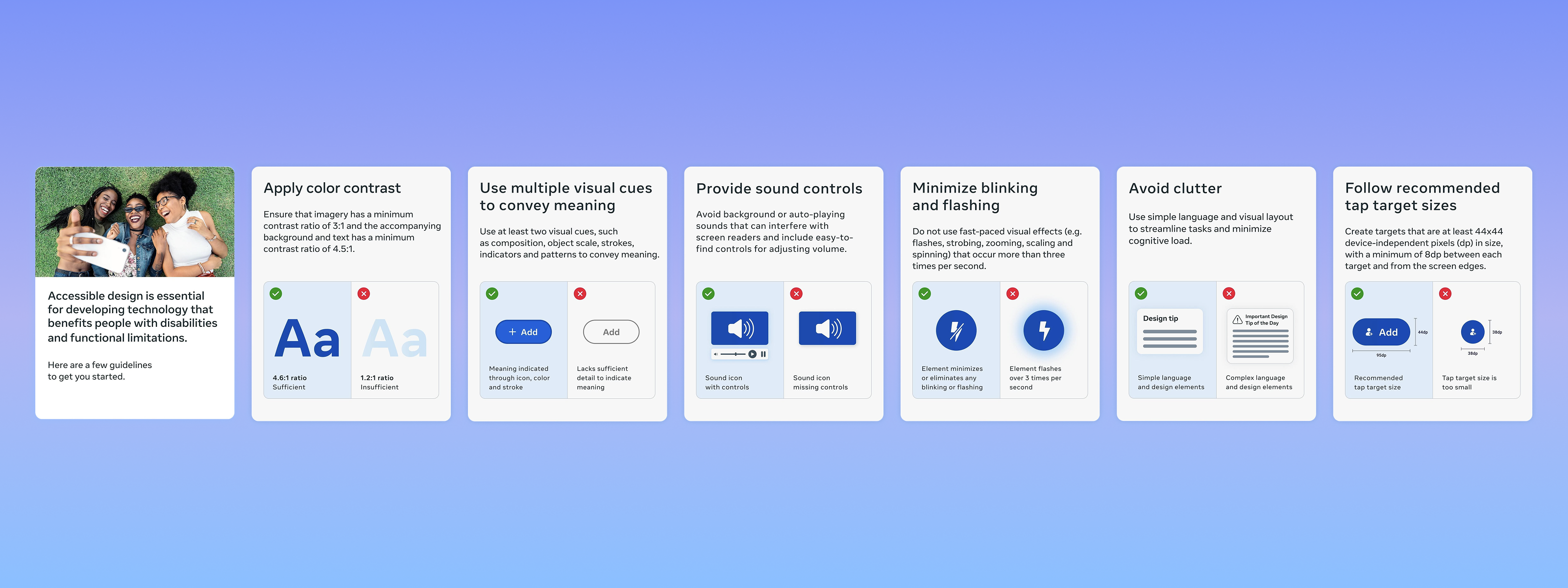
The Opportunity
Meta serves over 4 billion people globally. But for years, there was no centralized design team dedicated to making sure those products worked for everyone — including the 1.3 billion people worldwide living with significant disabilities. With increasing regulation, growing internal advocacy, and a mounting design debt problem, the moment was right to build something new.
Why Accessibility
Accessibility is central to Meta's mission of fostering human connection through technology. Beyond the moral case, the regulatory landscape was shifting — increasing compliance requirements meant that the lack of centralized guidance wasn't just a product quality issue, it was an organizational risk.
My Role
Product Design Manager
I was brought in to build and lead the Product Design function within Meta's accessibility team. Over 11 months, I grew the PD team from just myself to 7 Product Designers, partnered closely with a Content Design lead, and drove accessibility strategy in partnership with VP and Director-level design leadership across the company.
A Structural Gap at Scale
Meta had individual teams making accessibility improvements in isolation — but no shared standards, no education infrastructure, and no centralized ownership. The result was predictable: inconsistent outcomes, repeated work, and no clear way to prioritize or measure progress.
What We Heard From Teams
- Little awareness of upcoming accessibility regulations
- No clear picture of how well existing design systems were addressing accessibility needs — only 54% of design system teams had conducted any kind of accessibility review
- Teams were solving the same problems independently, with no shared guidance or support
- Difficulty prioritizing accessibility work against other roadmap commitments
The Design Systems Problem
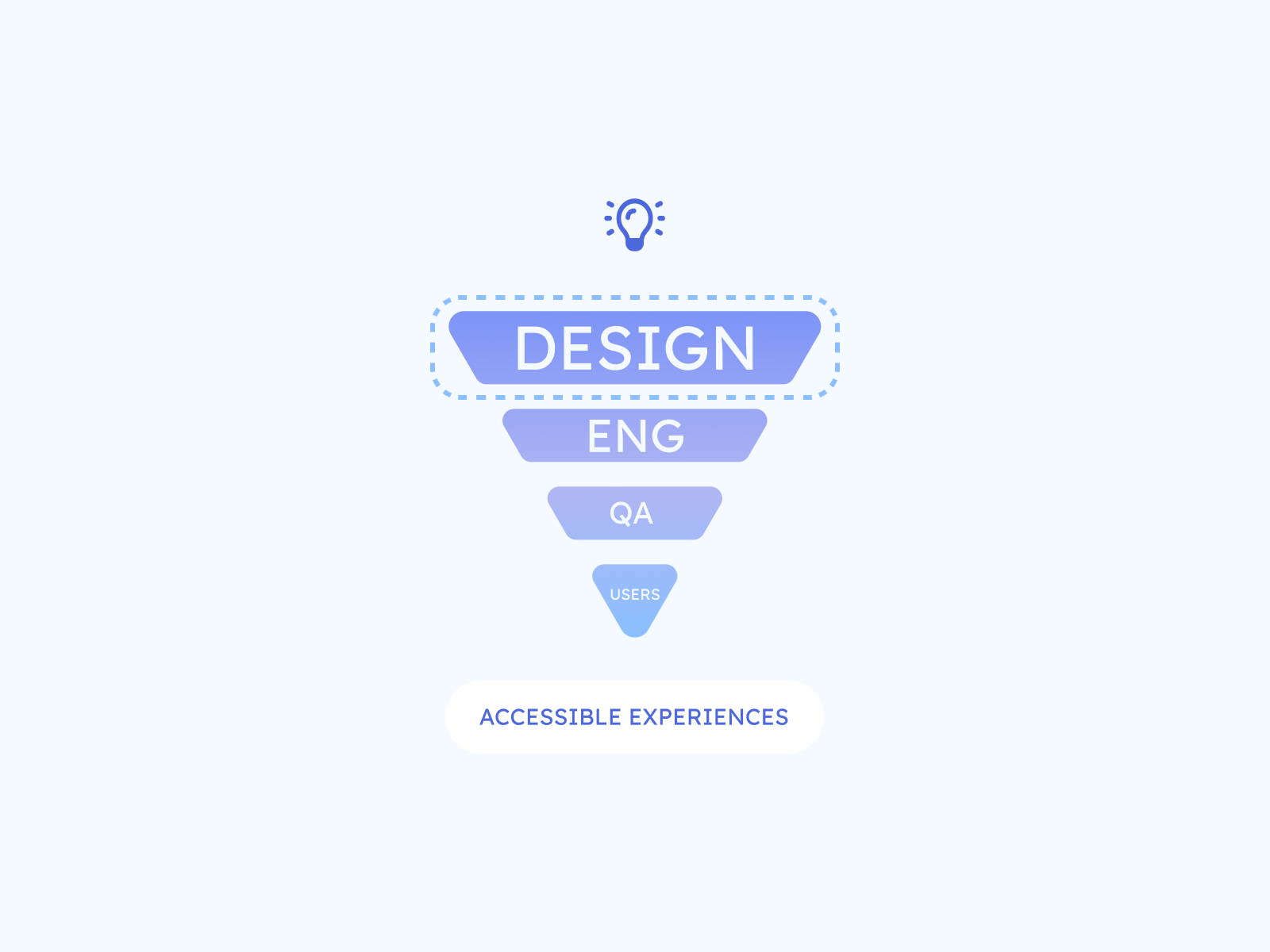
One finding stood out above the rest: nearly 30% of accessibility issues across Meta's products could be resolved by fixing the design systems those products were built on. But design system teams lacked the alignment, strategy, and support to actually do that work. Fixing this one layer could unlock an outsized impact across the company.
How Might We
How might we leverage existing components to scale the accessible design process — while also building the partnerships and support structures to actually get it done?
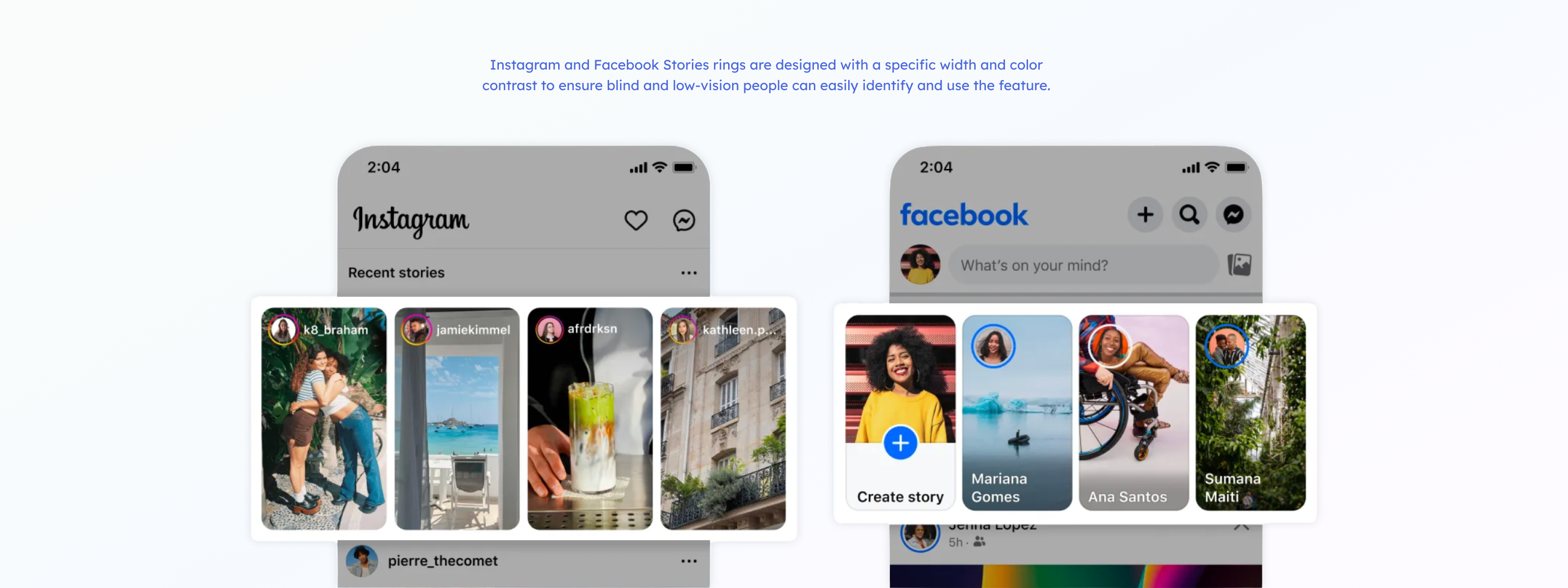
Company-Wide AX Strategy
Four-pillar strategy for accessibility at scale:
Audit Meta's products and design systems against accessibility standards, establish baselines, and prioritize the highest-impact fixes.
Build the Accessible Design course, company-wide protocols, and a shared forum so every design team had access to guidance and expertise.
Partner directly with design system teams to embed accessibility into the components themselves — making the scalable fix happen at the foundation layer.
Look beyond compliance. Identify where accessible design could actually unlock better experiences for everyone — not just meet the bar, but raise it.
The Design Systems Workstream
The most complex and highest-leverage part of the work was the design systems initiative. With VP and Director buy-in, I stood up a dedicated workstream with 3 senior PDs, 1 Content Designer, 1 UX Researcher, 1 PM, and 3 engineers. We were solving a coordination problem as much as a design problem.
How We Ran It
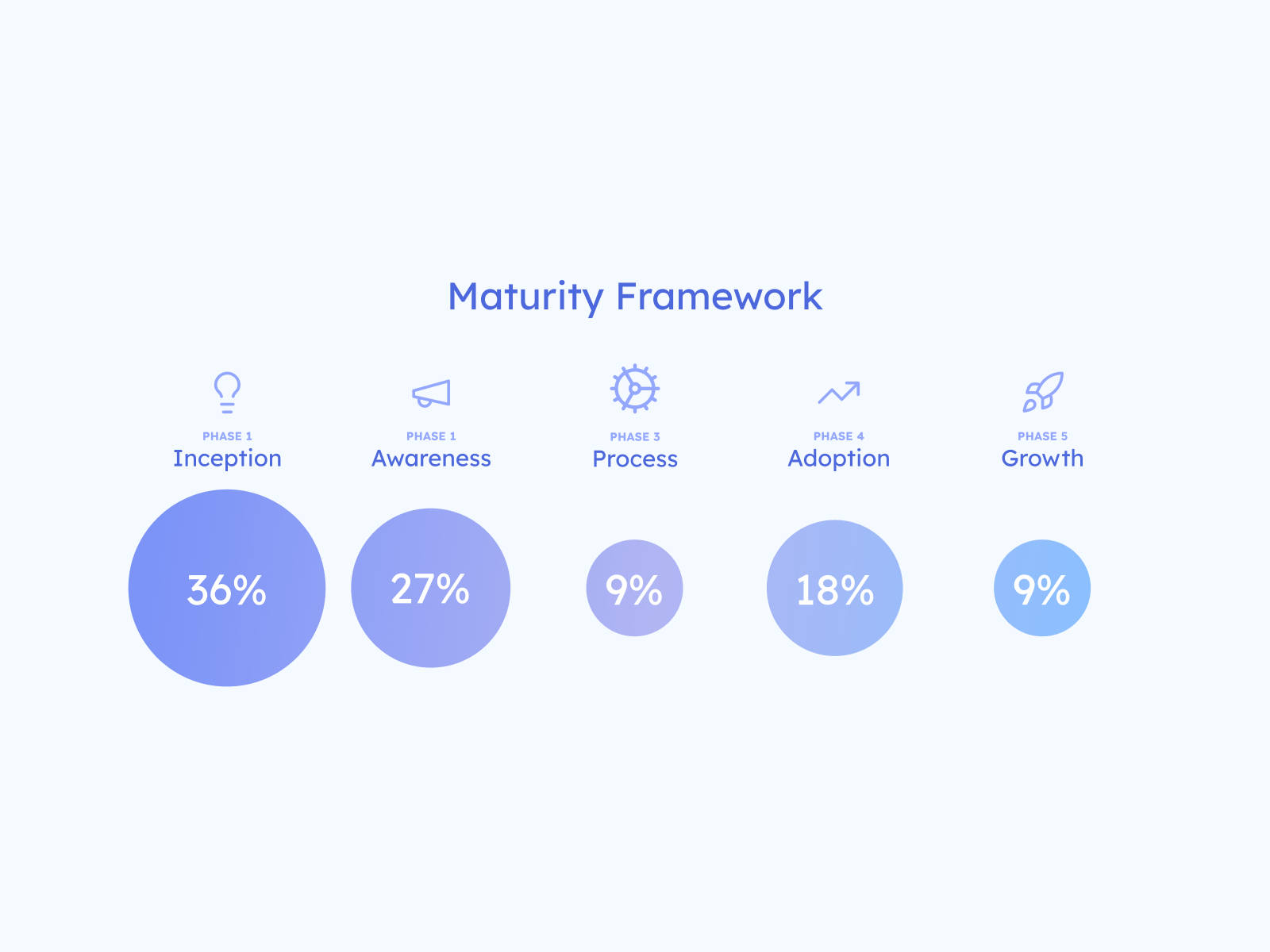
- Evaluated each design system against an accessibility maturity model to establish baselines
- Created shared documentation — guidance, best practices, and decision frameworks teams could self-serve
- Built a tracking dashboard to monitor adoption, prioritize effort, and surface wins to leadership
Building a Team From Scratch
I started as the sole Product Designer on the team. Over the course of the project, I grew it to 7 PDs — hiring for a mix of experience levels and specializations, from accessibility specialists to generalists who could embed with product teams.
Influencing Without Direct Authority
Our team had no authority over the product teams we were trying to change. We had to earn it — through credibility, relationship-building, and making the case that accessible design was worth the investment. Getting VP and Director buy-in early was a deliberate strategy, not a happy accident.
Navigating Pushback
There was real resistance. Rather than treating it as a blocker, I focused on understanding what teams actually needed from us — and demonstrating wins in terms that mattered to them, including how accessibility improvements reduced support burden and improved metrics.
Balancing Leadership With Design
With a team of 7 to support, my job shifted from doing the design to enabling the team to do their best work. Learning to deliberately decline lower-priority asks was as important as any strategic decision.
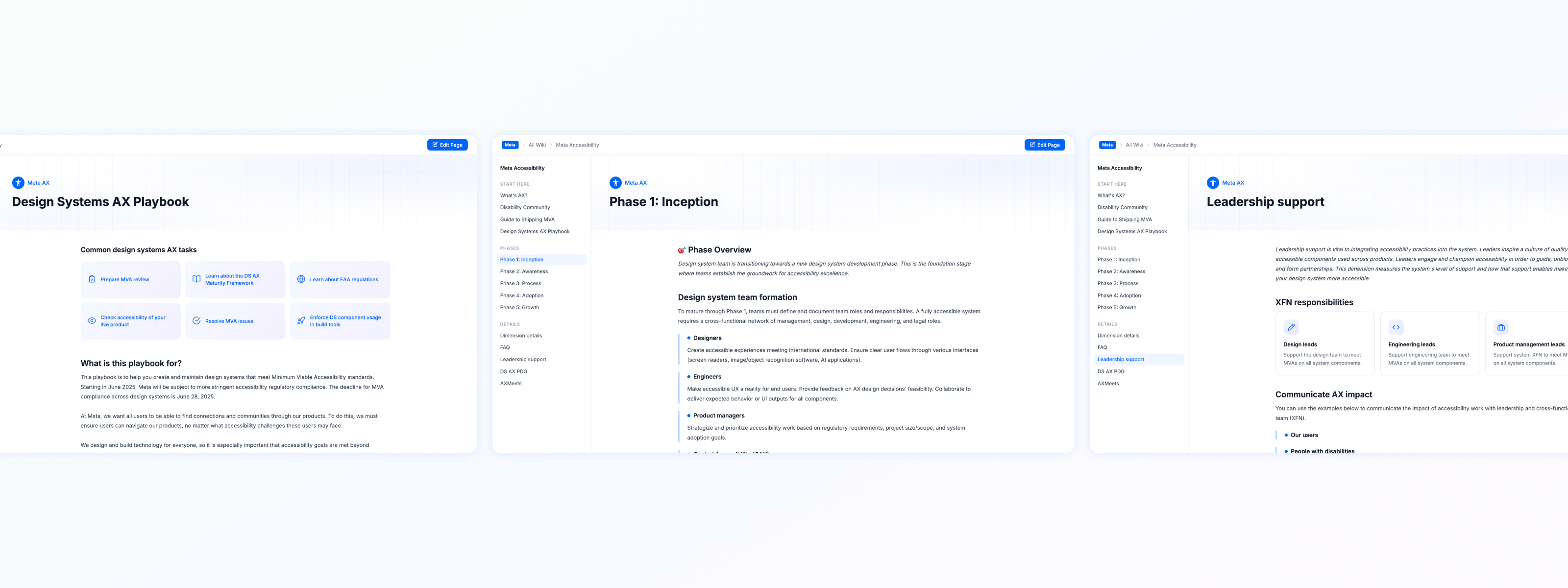
What We Built
Over 11 months, the MAX design team established a new function, a new strategy, and a new culture around accessibility at Meta.
The team achieved all goals set for H2 2024. The AX Playbook saw strong monthly active user adoption across the 102 people in the Design Systems organization.
View AX Playbook Prototype ↗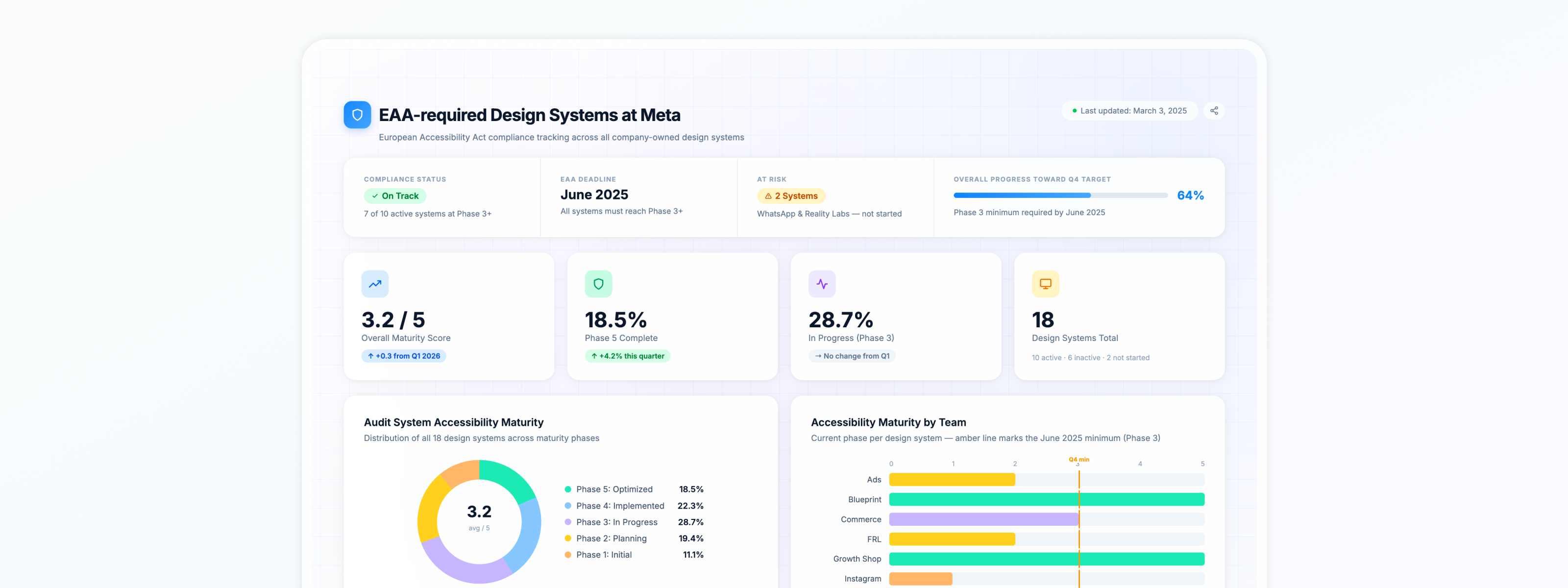
Making change in a company of Meta's size requires patience, influence, and a willingness to play a long game. The hardest part wasn't the design — it was the organization.
"The work I'm most proud of here isn't the metrics — it's that we built something that didn't exist before. A team, a strategy, a culture. That kind of foundation is the hardest thing to create and the thing that lasts the longest."